
Last updated November 22, 2026
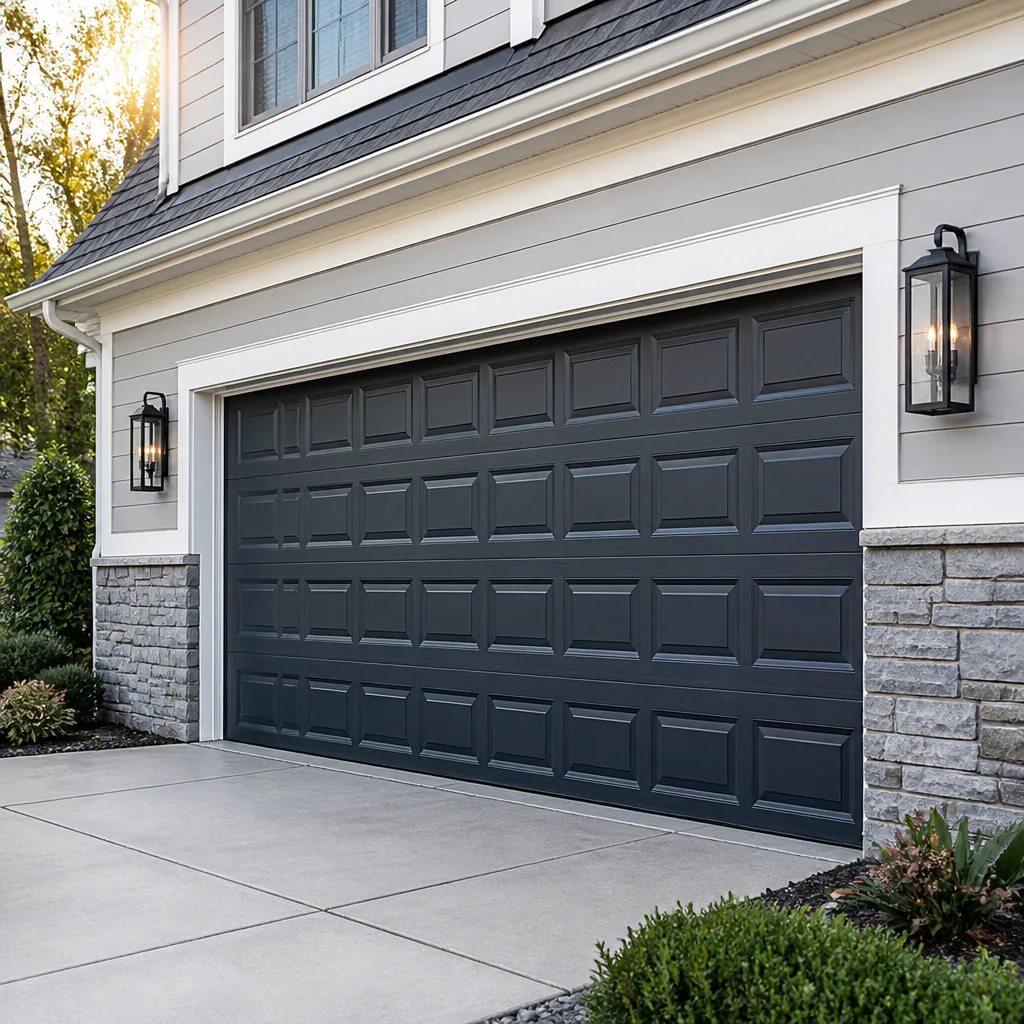 Raised-panel steel
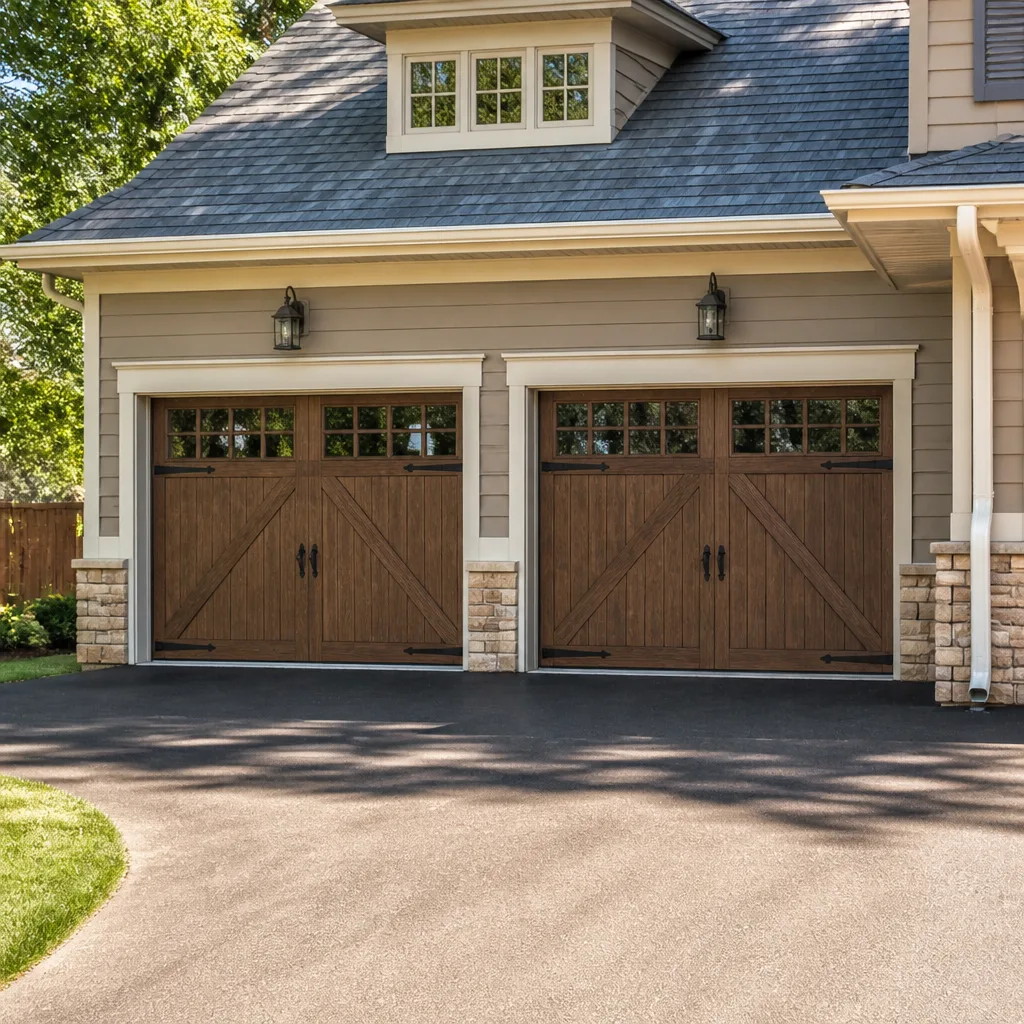 Carriage house
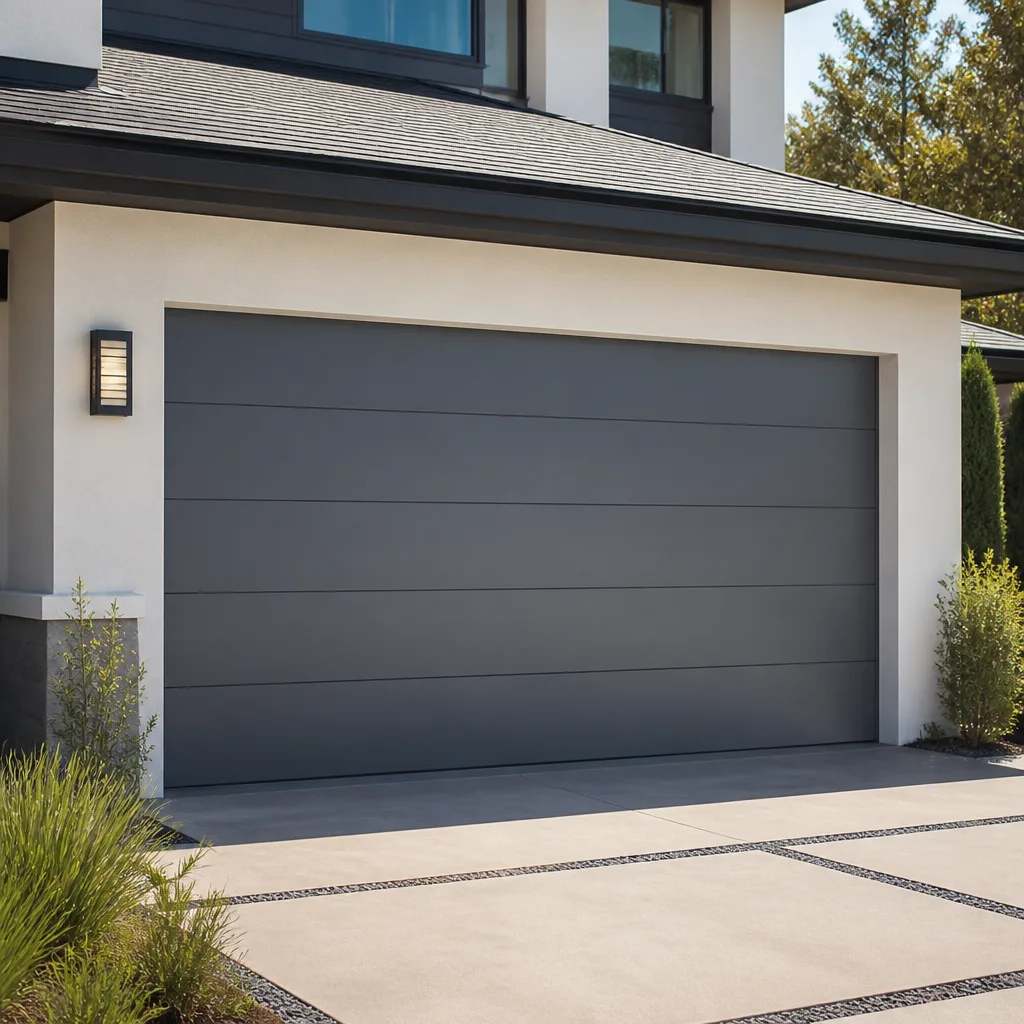 Modern flush
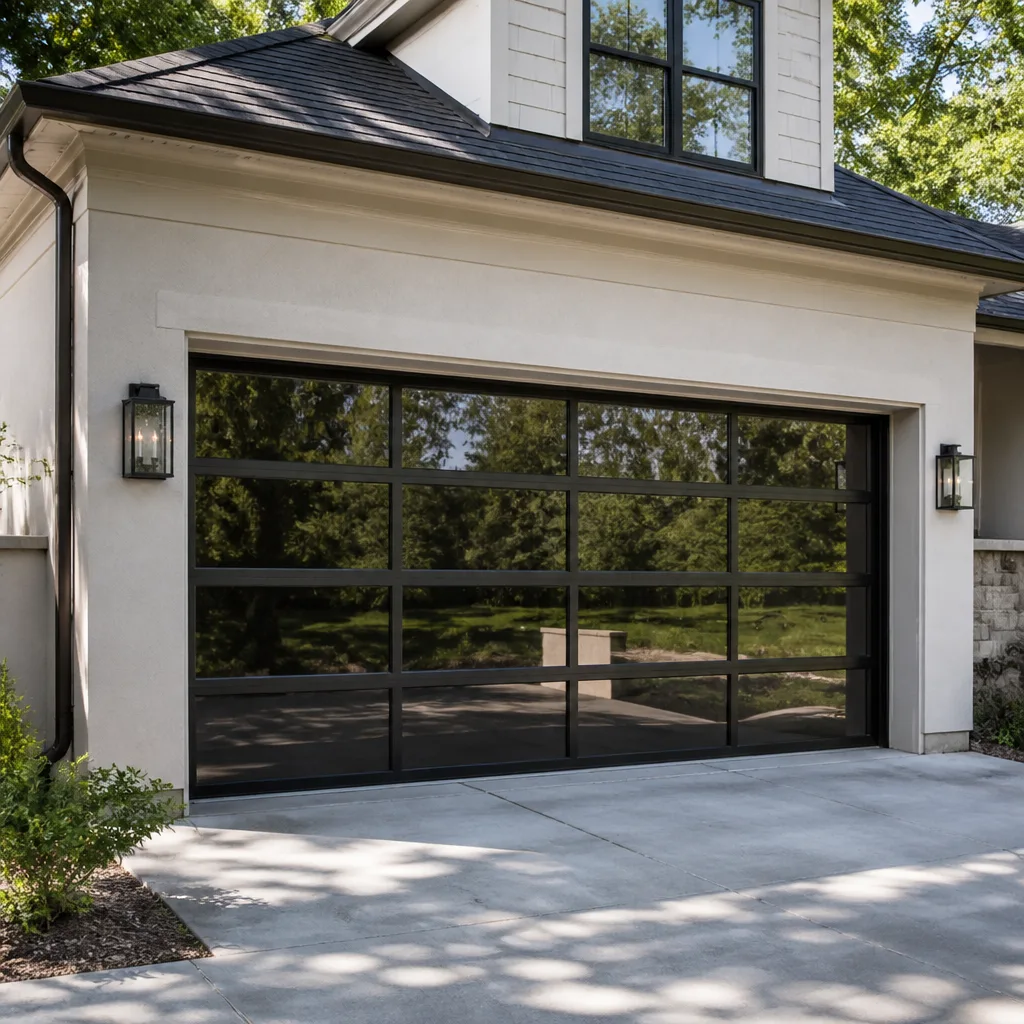 Full-view glass
 LiftMaster openers
 Chamberlain openers
Full 25-point door and opener safety check with every visit - springs, cables, rollers, tracks, and your LiftMaster or Chamberlain opener included
You get a price before we start. It does not change when the pro arrives.
Get your free estimateHow to Hire a Garage Door Contractor in Newport News: A Step-by-Step Guide
The person who quotes your spring replacement may not be required to hold a specialty license for the work. Virginia does not issue a garage door-specific contractor classification, and that single fact changes how you should shop. The industry has a low barrier to entry, so the vetting step matters far more than the price comparison you were probably planning. In this guide we walk through what Virginia licensing actually covers for garage door work, the exact questions to ask before you schedule, how to read an estimate line by line, what a real warranty looks like in writing, and the Newport News market quirks that catch homeowners off guard. Everything here is written for people who depend on their garage door as a daily entry point, not a decorative afterthought.
Quick Answer
To hire a garage door contractor in Newport News, verify the company’s Virginia contractor credentials, confirm they specialize in garage doors rather than general handyman work, ask how they handle springs and openers, request a written estimate with itemized parts and labor, and get the warranty terms in writing before any work begins. The cheapest bid is rarely the safest one. Focus your energy on vetting, because that is the step most homeowners rush.
Styles & brands we work with
- Raised-panel steel
- Carriage house
- Modern flush
- Full-view glass
- LiftMaster openers
- Chamberlain openers
Table of Contents
- What Does Virginia Licensing Actually Cover for Garage Door Work?
- What Questions Should You Ask Before Scheduling?
- What Are the Red Flags Unique to the Newport News Market?
- How Do You Read a Garage Door Estimate Line by Line?
- Why “Family-Owned” and Google Reviews Aren’t Enough
- What Does a Legitimate Warranty Look Like in Writing?
- Why Brand-Agnostic Expertise Matters
- How a Professional Hire Should Unfold, Step by Step
What Does Virginia Licensing Actually Cover for Garage Door Work?
Virginia does not have a specialty contractor license category for garage doors. The state regulates contractors broadly through the Department of Professional and Occupational Regulation, but there is no separate “garage door installer” classification the way there is for electrical or plumbing trades. That means anyone with a general contractor license, or in some cases no specialty credential at all, can legally quote garage door work in Newport News.
This is the crux of the problem. The barrier to entry is low, and the consequences of a bad installation can be serious. A torsion spring under load stores enough energy to cause real injury. A door that comes off its track can damage a vehicle, a wall, or a person. When there’s no mandatory specialty certification, the burden of verification shifts to you.
Here’s what that means in practice:
- Ask whether the company holds a Virginia contractor license and confirm the license is active. The state’s licensing lookup is public.
- Ask specifically about garage door experience, not general construction experience. A licensed general contractor who has never balanced a door is not the same as a garage door specialist.
- Ask whether the company carries general liability insurance. A licensed contractor should be able to provide proof.
- Ask which brands they’re trained to service. A company certified across multiple manufacturers has demonstrated training most generalists haven’t pursued.
One more point: because the licensing requirement is broad rather than specific, don’t assume a license equals garage door competence. Treat the license as a floor, not a ceiling. The real signal is whether the company does garage doors exclusively or as one of a dozen services. A plumbing-and-HVAC outfit that also installs garage doors is spreading attention thin. A company that does garage doors only has built its whole operation around one mechanical system, and that focus shows in the questions they ask and the parts they recognize.
What Questions Should You Ask Before Scheduling?
When you call, you’re evaluating the company as much as they’re evaluating your door. A competent garage door company in Newport News will welcome detailed questions. A company that dodges them is telling you something.
Here are the questions we’d want answered if we were in your position:
- Do you do garage doors exclusively, or as a side service? A dedicated operation will answer without hesitation. A generalist will often hedge.
- Are you trained on the brand that’s on my door? The major installed brands in this region include LiftMaster, Chamberlain, Genie, Clopay, Amarr, Wayne Dalton, Craftsman, and Raynor. If your door carries one of those and the company draws a blank, that’s a problem.
- Can you handle a spring repair, or would you refer it out? Spring repair is one of the most dangerous jobs in the trade, and many handymen decline it. A company that does springs in-house has the training and tooling for it.
- Will you give me a written estimate before any work starts? The answer should be yes, every time.
- What does your warranty cover, and for how long? Get specifics on parts and labor separately. “Lifetime warranty” without terms is not a warranty.
- Do you offer emergency service? Doors fail on their schedule, not yours. A standing emergency service is a sign the company is set up for unplanned failures rather than best-case scenarios.
- Are your technicians experienced? Our technicians have up to 11 years of experience. Ask the equivalent question of any company you call.
None of these questions are unreasonable, and a good company will answer them without being prodded. If a quote feels rushed, or if the person on the phone is vague about brands, springs, or warranty specifics, thank them and call the next number. The conversation is free and takes five minutes. A bad install takes months to fully sort out.
What Are the Red Flags Unique to the Newport News Market?
Newport News has a few market conditions that create specific hiring risks. Knowing them ahead of time keeps you from becoming their next lesson.
Out-of-area companies that arrive after a storm. When a severe thunderstorm or a tropical system passes through Hampton Roads and leaves tree limbs on doors and outbuildings, companies with no roots in the area sometimes move through offering same-day service. These operations often leave before a follow-up visit becomes necessary. The tell is a phone number that isn’t local, a van with no company name on it, and pressure to decide on the spot. A legitimate company will not mind you sleeping on it.
Quotes that undercut by an unrealistic margin. If one bid is dramatically lower than the others, something is missing from it. Often it’s the labor to properly balance and test the door after install, or it’s a lower-grade spring that will fail sooner. Cheap springs are not cheap long-term.
No physical verification of the door before quoting. A phone quote on a spring replacement is a guess, not an estimate. A company that quotes without confirming the size, door weight, and spring configuration is throwing a number at a wall. Verified quotes come from seeing the door.
Vague warranty language. “Fully guaranteed” is not a warranty. It’s a mood. If the company can’t say in writing what is covered, for how long, and by whom, assume nothing is.
Pressure to add services. A spring that needs replacing does not necessarily mean the opener, the rollers, and the hinges all need replacing the same day. A trustworthy company will list what is worn, tell you what’s urgent versus what can wait, and let you decide.
No way to reach them on a return visit. Ask how you get in touch if something’s off after the job. If the answer is a single cell number that may or may not answer, note it.
None of these red flags are unique to garage doors in the abstract, but the low licensing barrier means the trade attracts more of them than it should. The vetting is the work. Do it once and you don’t have to do it again.
How Do You Read a Garage Door Estimate Line by Line?
An estimate tells you more about the company than any sales pitch. The line items reveal whether they intend to do the work fully or trim corners. Here’s how to read one.
Start with the spring. A spring price quoted as a single range is for one spring. Most doors carry a matched pair of springs, and matched springs are replaced together because an old spring paired with a new one puts uneven stress on the door. If your estimate lists one spring without explaining why, ask. If it lists a pair, expect the price to reflect two springs, not one. A quote that offers a single range for both springs is either confused or cutting corners.
Walk through the other line items and compare them against what a good estimate contains:
- Parts, listed by type and grade. Cheaper springs and openers exist and fail faster. Ask for the grade or cycle rating of what’s being installed.
- Labor, in hours or as a flat rate. You should be able to see what you’re paying for labor versus parts.
- Tracking, balancing, and testing after install. A door is not done when the spring is in. It’s done when the door opens and closes smoothly, sits balanced at mid-travel, and the safety reverse test passes.
- Opener calibration if the opener is being replaced. Travel limits and force settings need to be set correctly for a new door or opener.
- Disposal of old parts. Worth mentioning. Ask if it’s included.
- Warranty terms on parts and on labor, separately. If they’re lumped into one number, ask for detail.
- Clear total. Not a range, not a “starting at,” and not an add-on list that arrives after the job. A written estimate sets the price. The final invoice should match it, or it isn’t an estimate.
On the question of timing: for straightforward repair work, same-day service is realistic and something you can ask about. For a new door or full replacement, the best timeline you’ll get is the measurement visit plus the lead time on your chosen door. Any company promising same-day installation on a new door hasn’t measured yet.
We offer free estimates and put the price in writing before any work begins. If you want to see what that looks like for your door, garage door repair is a fair place to start.
Why “Family-Owned” and Google Reviews Aren’t Enough
Reviews and family ownership are table stakes. They’re not verification. A company can be family-owned and still be inexperienced at spring repair. Reviews can be genuine and still reflect routine jobs, not the hard ones. Verification goes deeper.
Here’s what the deeper steps look like:
- Verify the license through the state’s public lookup. Confirm active status and that the company name matches the entity on the estimate. A license number on a van is not verification unless you’ve checked it.
- Ask for the physical address of the company. Not a mail drop, not a P.O. box. A garage door company that can’t give you a verifiable operating address is not necessarily bad, but it is a question mark. Some legitimate companies operate lean, but a quick check helps.
- Confirm insurance directly. Ask for a certificate of insurance, or the name of the insurer and the policy’s effective dates. A licensed company will not mind this.
- Check whether the company services the brands installed on your door. A company certified across multiple manufacturers has invested in brand-specific training. That is a stronger signal than a five-star average.
- Ask what specific technical capability the company has that a generalist doesn’t. Spring repair done in-house, opener diagnosis, and same-day emergency service are three concrete answers. “We do everything” is not one.
When we look at the Newport News market, the companies we’d trust are the ones that specialize in garage doors exclusively. That specialization shapes everything. It means when you call about a LiftMaster opener that’s not responding, the person on the other end knows the specific diagnostic sequence. When you call about a Wayne Dalton door that’s come off its track, they know the hardware. When a Craftsman opener reverses on the way down, they know the safety sensor alignment before they’ve seen the door. Generalists don’t have that.
What Does a Legitimate Warranty Look Like in Writing?
A real warranty is a document with terms. It says what is covered, for how long, what voids it, and who administers the claim. Anything less is a promise with no enforceability. Most homeowners learn this distinction after the fact. You have a chance to learn it before.
Here’s what to look for in writing:
- Separate terms for parts and labor. The spring manufacturer may warrant the spring for a defined number of cycles. The installing company warrants the labor separately. These are not the same thing, and a combined figure hides the difference.
- Clear coverage start date. Coverage usually starts on the date of installation, not the date of purchase.
- What voids the warranty. Common voiding conditions include using parts from another vendor, unauthorized repairs by someone else, or failing to maintain the door. Read this section carefully.
- How to file a claim. A phone number or a process, not a vague “contact us.”
- Exclusions. What’s not covered. Cosmetic damage, weather-related damage, and misuse are often excluded. That’s normal, as long as it’s stated.
Vague warranty language does a specific kind of harm. It signals that the company either hasn’t thought the terms through or doesn’t plan to honor them. If the written terms don’t match what was said verbally, the written terms win in most disputes. Make sure they say what you were told.
For spring repair in particular, warranty terms matter. Springs have a known service life measured in cycles, and quality matters as much as installation. Ask what cycle rating you’re getting. If the company can’t say, assume you’re getting the low end.
Why Brand-Agnostic Expertise Matters
Plenty of companies are tied to one manufacturer. That is fine for the manufacturer and less so for you, because the recommendation you receive tends to be the one tied to the company’s relationship, not necessarily the one that fits your door, your opener, and how you use the space.
We’re trained on eight major garage door and opener brands: LiftMaster, Chamberlain, Genie, Clopay, Amarr, Wayne Dalton, Craftsman, and Raynor. That means when we look at your door, the recommendation can follow what’s actually installed and what makes sense for your home rather than the brand that maximizes our margin. A door that’s twelve years old and needs repair might be better served with a repair than a replacement. A Craftsman opener that’s failing at the logic board may be a clean fix. A LiftMaster opener that’s nearing end of life may warrant replacement of the opener while keeping the door. Those calls get made on evidence, not on brand relationships.
For homeowners, the practical question is this: can the company you hire work on the brand that’s on your door? If you’re not sure what brand your door is, look for a sticker or plate on the inside of the door panel or check the opener housing. Most doors have identifying marks. Once you know, ask the company whether they’re trained on it. If the answer is “not sure, but we can take a look,” take a look elsewhere first.
How a Professional Hire Should Unfold, Step by Step
Hiring well is a sequence, not a single decision. Here’s what a clean process looks like from first call to follow-up.
- Identify the problem. Is the door stuck, noisy, unbalanced, or failing to reverse? Does the opener run but the door stays still? That’s usually a mechanical disconnect. Does the door move but the opener doesn’t respond? Probably a remote or logic board issue. The clearer you can be, the better the estimate.
- Call two or three companies and ask the questions from the earlier section. Take notes. The company that answers thoroughly on the phone is usually the one that shows up prepared.
- Schedule a measurement and on-site quote. A phone estimate on a mechanical system is a guess. A professional company will want to see the door.
- Compare written estimates line by line. Look for parts, labor, tracking, testing, disposal, and warranty terms. Discount the cheapest one if it’s missing half the line items.
- Ask for the warranty in writing before you sign. If it isn’t offered proactively, ask.
- Confirm the schedule. For repair work, same-day is realistic. For installation, expect a measurement visit plus the lead time on the door.
- Walk the job when it’s done. Run the door through a full cycle. Test the safety reverse. Look at the spring, the cables, and the tracks. If something is off, say so before the technician leaves.
- Keep the documentation. The written estimate, the warranty, and the invoice. If something fails later, you need to be able to make a claim quickly.
If your situation is more of a mechanical diagnosis than a clear repair, start with garage door opener repair. If you’re looking at a full replacement, the sequence runs through garage door installation. Either way, the core process is the same.
Common Mistakes to Avoid
- Hiring on price alone. The lowest bid is often the least complete one, and it tends to omit the tracking, testing, and balancing that protect the door over time. Compare line items, not just totals.
- Not verifying the license. Virginia has no garage door-specific classification, so the state lookup is the only check available. Use it. It takes two minutes and it tells you whether the entity on the estimate is actually licensed.
- Accepting a phone quote on a spring. Springs come in different sizes and configurations depending on the door. A quote without seeing the door is a guess. Ask for an on-site visit.
- Skipping the warranty review. “Lifetime warranty” without written terms is not a warranty. Ask for the document, and read what voids it.
- Trusting reviews as the whole picture. Reviews reflect routine jobs and don’t say much about spring repair, opener diagnosis, or how the company handles a failure after the fact. Check the operational facts: license, insurance, brand training, and specialization.
- Letting an out-of-area company quote after a storm without verification. A storm drive-through doesn’t come back. Confirm the company has a verifiable presence in the area before scheduling.
- Calling a generalist for a spring repair. Spring repair is dangerous work that many handymen decline. Hire a company that does it as a standard service and knows the safety requirements.
See the difference
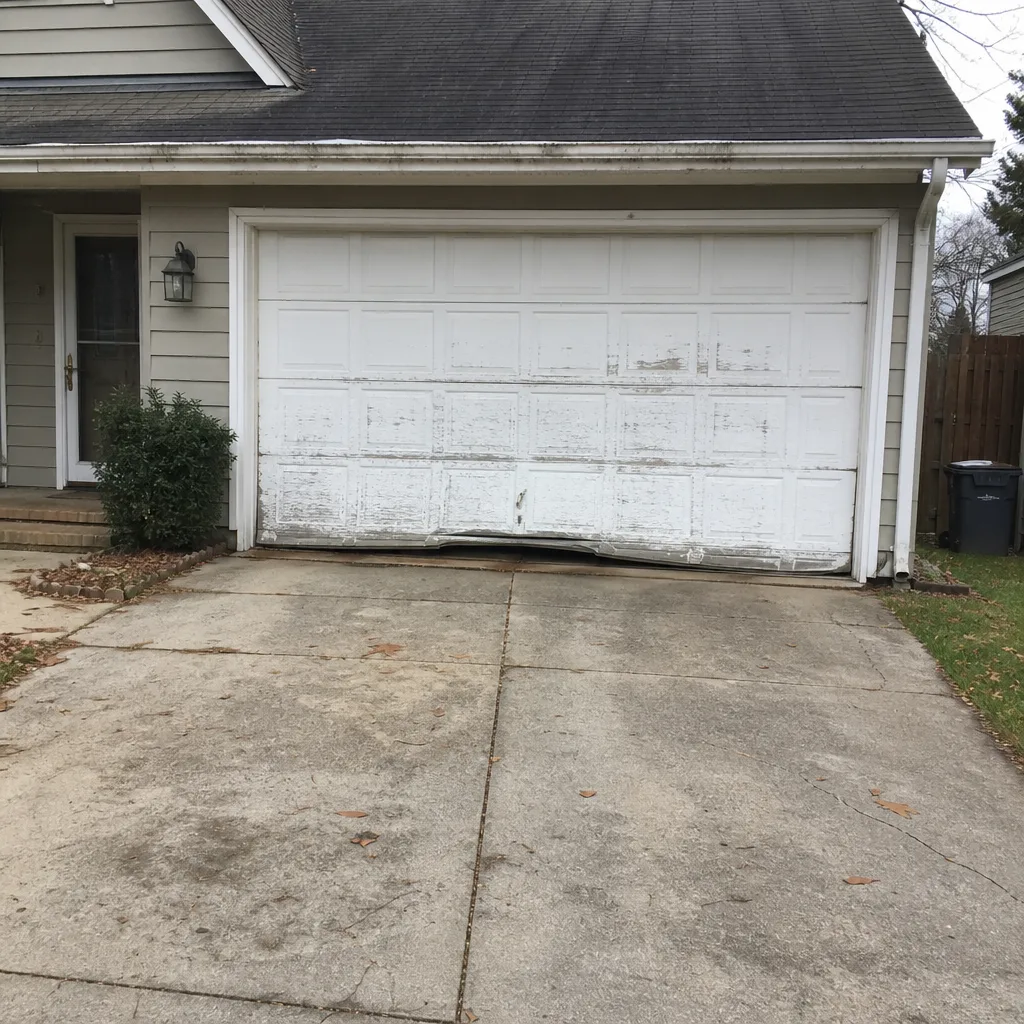 Before
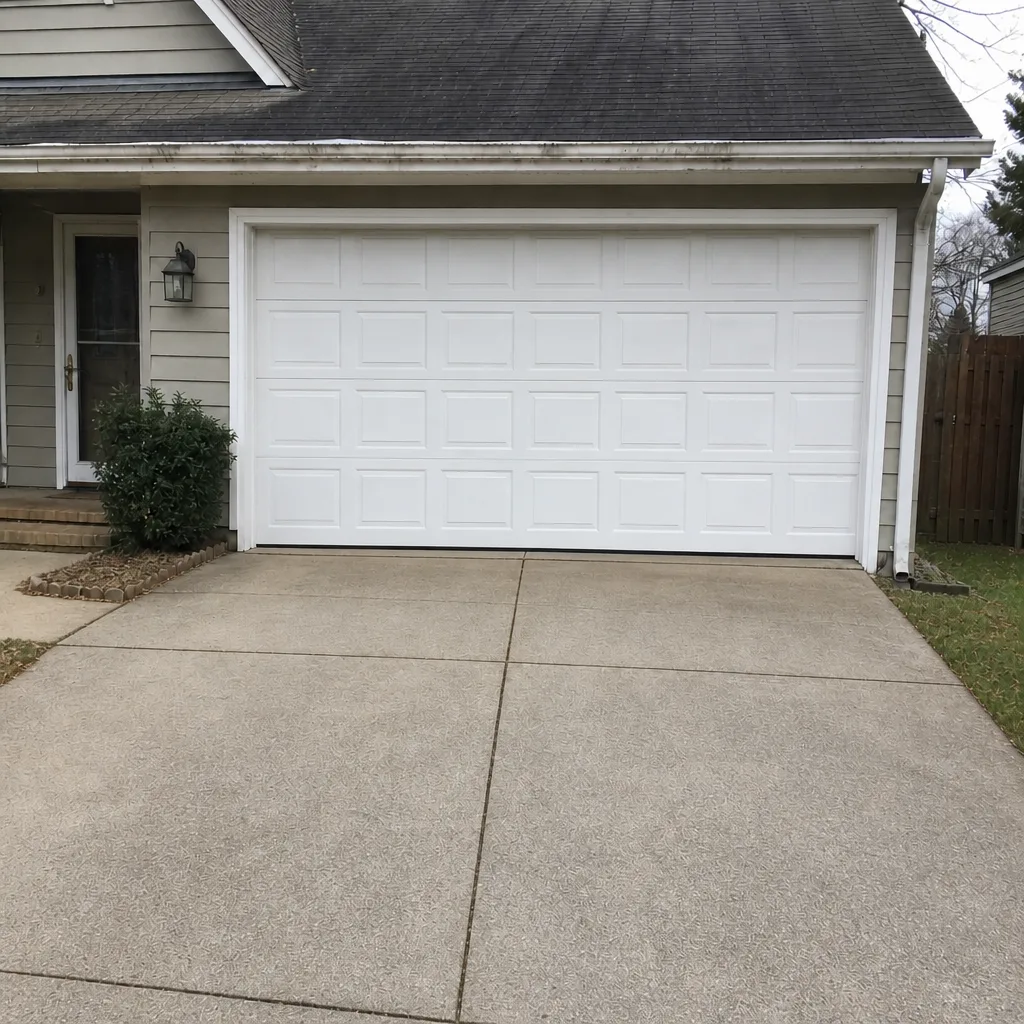 After
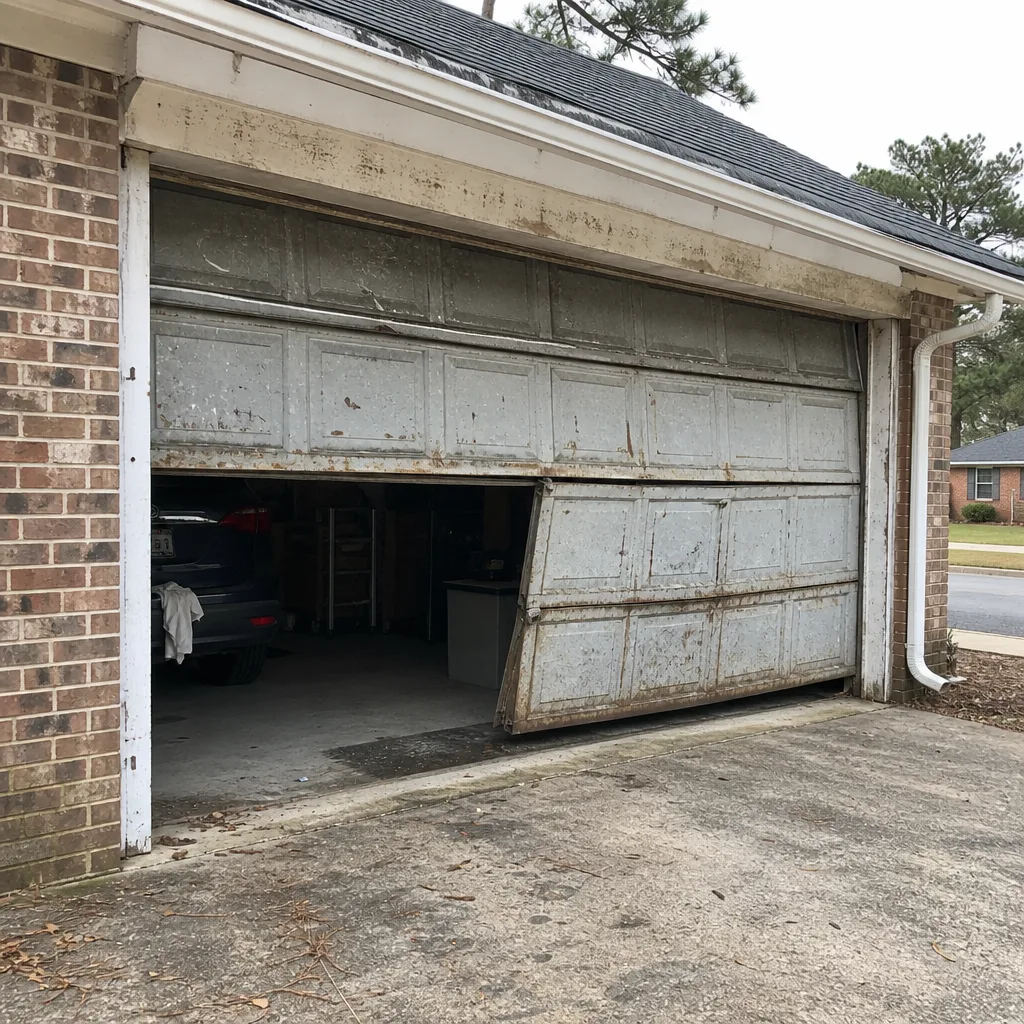 Before
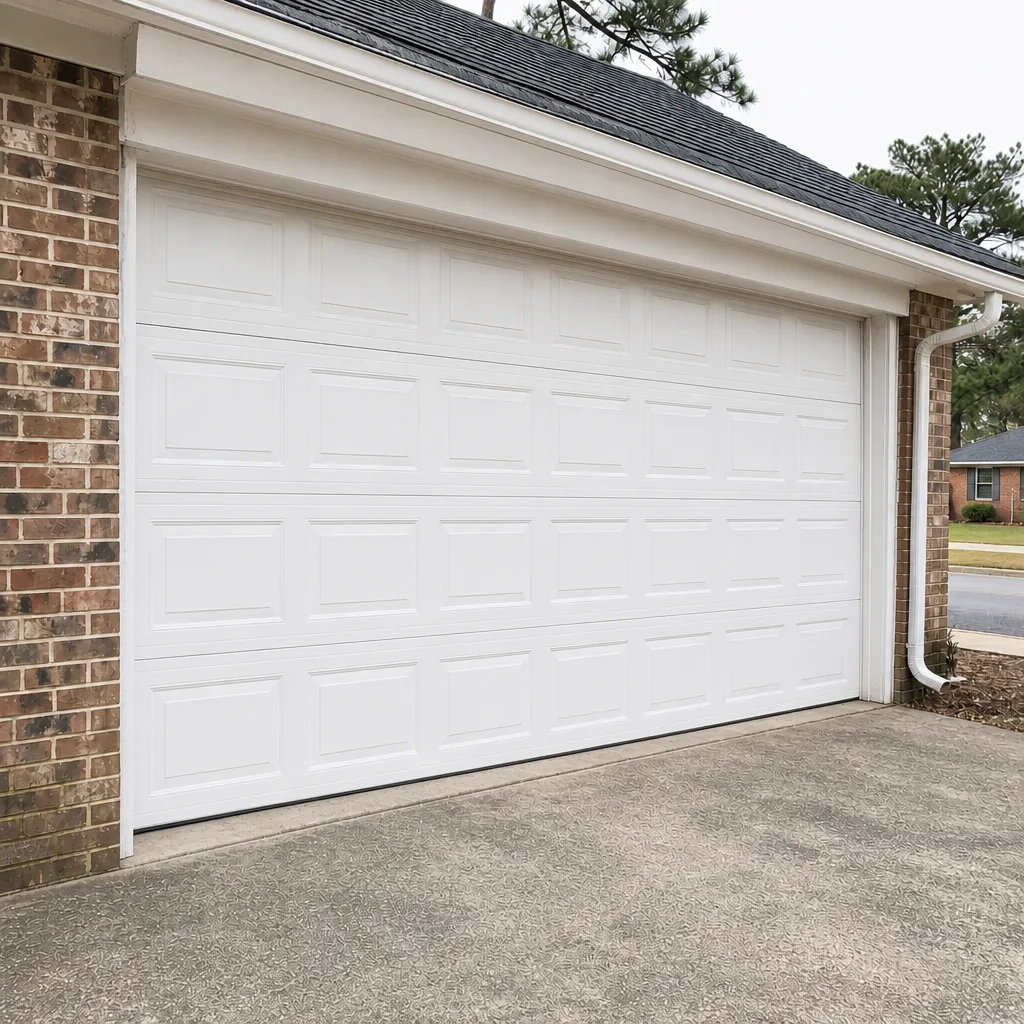 After
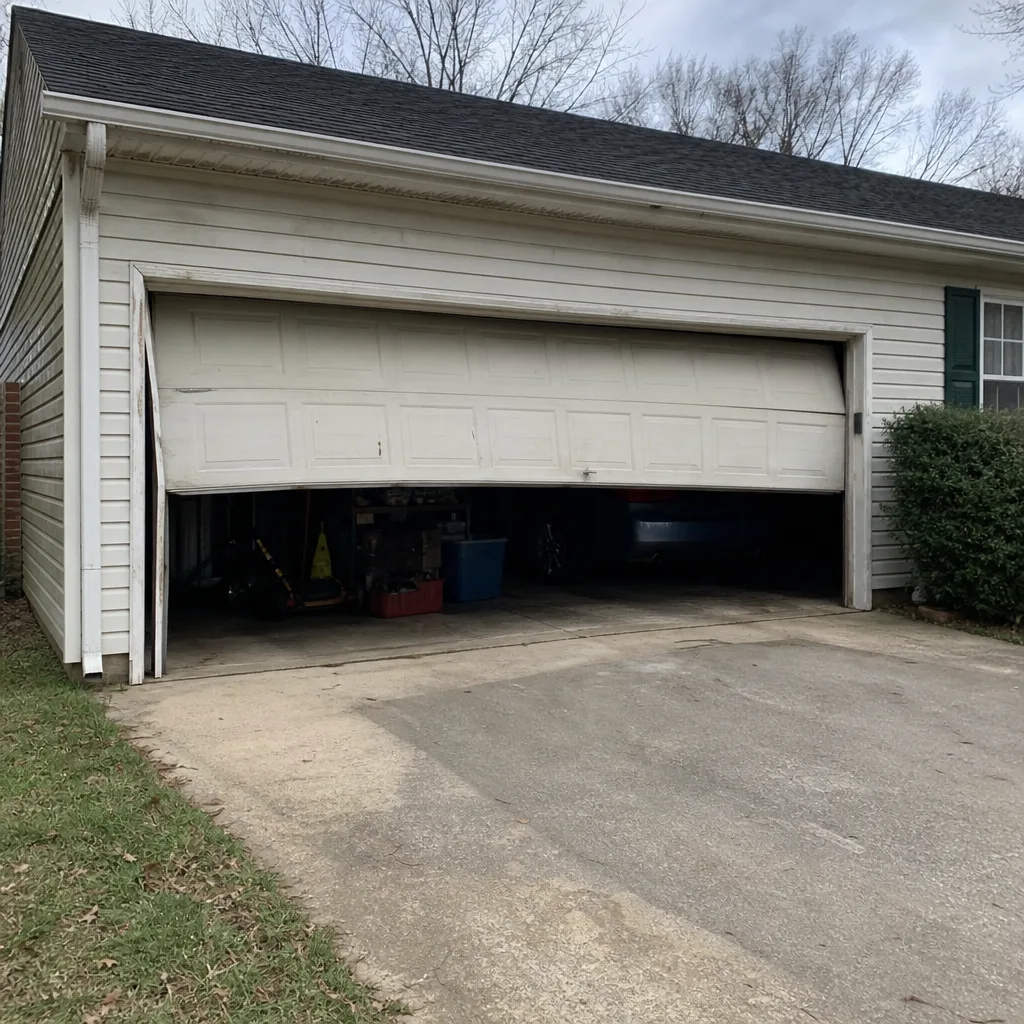 Before
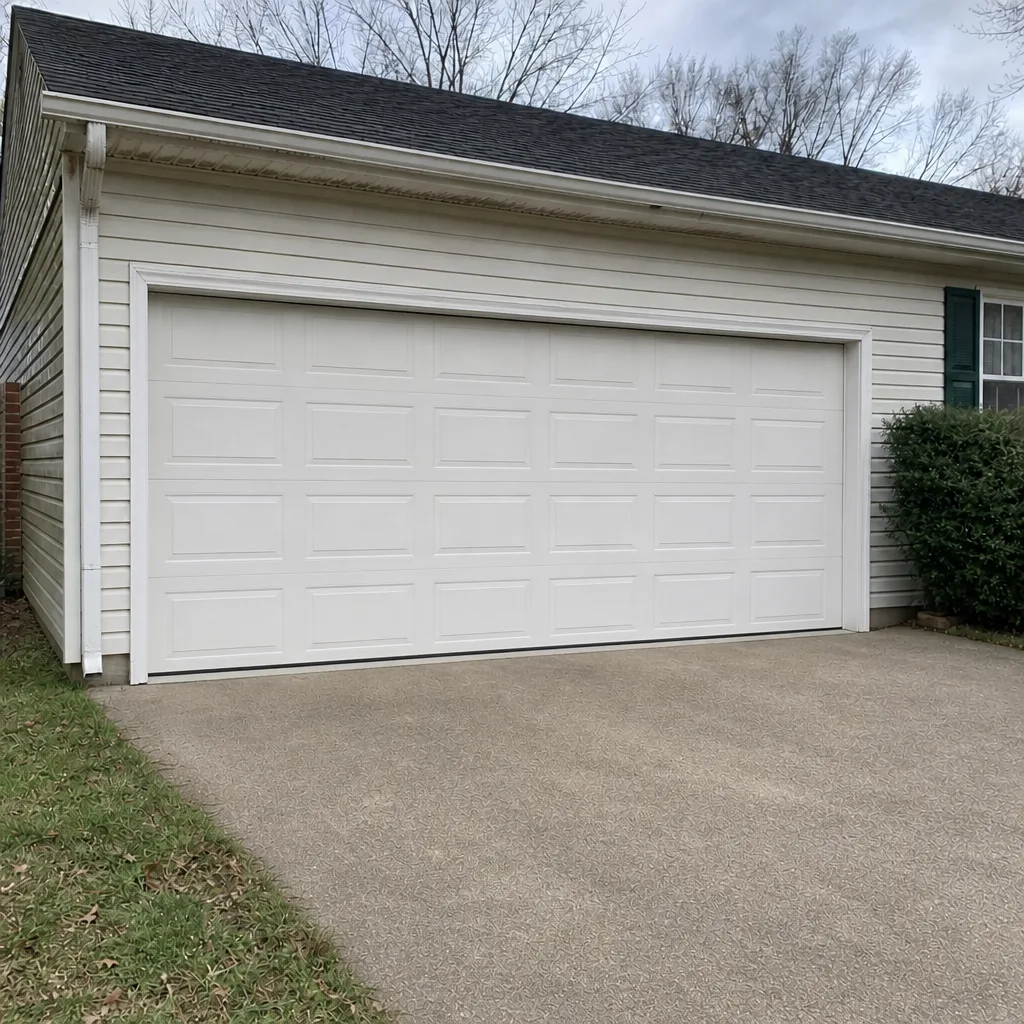 After
When to Call a Professional
Some garage door problems are cosmetic. Others are genuinely dangerous, and spring work is the clearest example. A torsion spring under tension stores enough energy that a mistake during handling can cause serious injury. Don’t attempt spring repair yourself, and don’t hire anyone who treats it as routine. A door that won’t close, a door that reverses unexpectedly, a snapped cable, or an opener that’s grinding or repeatedly resetting are all signs to call a specialist rather than troubleshoot further. An unbalanced door or a door off its track is also a call-the-professional situation because the risk of damage or injury compounds with every cycle.
If your garage door is your primary entry point and it’s out of service, every hour matters. Newport News Garage Door Repair Pros offers free estimates in Newport News. Call (833) 508-9227. We answer 24/7. Fast dispatch from 7am to 7pm, Sunday through Friday.
Frequently Asked Questions
Virginia does not issue a garage door-specific contractor classification, so there is no mandatory specialty license for this work. That’s why vetting matters more here than in trades that have a dedicated license category. Ask for the company’s Virginia contractor license and verify it through the state’s public lookup, and ask specifically about garage door experience. If you want a starting point, call us at (833) 508-9227 and we’ll answer those questions directly.
Ask for a certificate of insurance or the name of the insurer and the policy’s effective dates, and confirm the coverage is active before work begins. A licensed company will provide this without pushing back. Our estimate is free, and we’ll confirm both license and insurance status before scheduling. Call (833) 508-9227 for details.
Spring repair pricing varies with the door, the spring configuration, and whether one or both springs are being replaced, so a written estimate after an on-site look is the only accurate number. Most doors carry a matched pair of springs, and the two are replaced together, so a pair costs roughly twice the price of one. Call (833) 508-9227 for a free estimate. The price is set in writing before any work starts.
Yes. Same-day repair is realistic for most straightforward jobs when you call early. We answer 24/7 and dispatch from 7am to 7pm, Sunday through Friday. A call outside dispatch hours is booked into the next opening, Sunday through Friday, 7am to 7pm. For a new door or a full replacement, expect a measurement visit plus the lead time on the door rather than a same-day install. Call (833) 508-9227 to schedule.
The most widely installed brands in this area include LiftMaster, Chamberlain, Genie, Clopay, Amarr, Wayne Dalton, Craftsman, and Raynor, so a company trained across those covers most of what’s already on doors in Newport News. Brand-agnostic training also means the recommendation follows the door and your situation, not a manufacturer relationship. Anyone unclear about your brand should be a pass, not a wait-and-see. Call (833) 508-9227 and we’ll tell you whether we cover yours.
A legitimate warranty names what is covered on parts and labor separately, how long each is covered, the coverage start date, what voids it, and how to file a claim. “Fully guaranteed” or “lifetime warranty” without a document is not enforceable. Ask for the written terms before you sign, and confirm they match what you were told verbally. Call (833) 508-9227 to review our warranty terms before scheduling.
The Bottom Line
The garage door trade has a low barrier to entry, and Virginia’s lack of a specialty license for garage door work means the vetting is on you. Verify the contractor license through the state, confirm insurance, ask about brand training rather than assuming it, request an on-site measurement before any spring is quoted, read the estimate line by line to see what’s included, and get the warranty in writing. “Family-owned” and five-star averages are good to see, but they’re starting points, not conclusions. If your door needs work now, Newport News Garage Door Repair Pros is where we’d start, and the estimate is free.
Contact
If you’d rather just get a trained technician out to look at your door, call Newport News Garage Door Repair Pros at (833) 508-9227 for a free estimate. We answer 24/7. Fast dispatch from 7am to 7pm, Sunday through Friday. We work on the brands already on doors across Newport News, from LiftMaster to Wayne Dalton and the rest of the major manufacturers, and we’ll tell you what your door needs in plain terms, in writing, before any work begins.
Written by the team at Newport News Garage Door Repair Pros.